
This guide is a list of decisions, not a clearance to travel. Visa rules, insurance wording, road closures, and mountain regulations change. Where this page cannot be current, it says what to confirm and with whom. It is not legal advice and not a snow report.
- Planning
- Preparation
- Access
- Transport
- Accommodation
- Equipment
- Season
- Safety
- Logistics
- Borders, visas, insurance
Planning a trip
Start from the mountain, not from a city you would like to see. Damavand and Alam Kuh are Alborz journeys, reached from the Tehran side of the range. Zard Kuh and Dena are Zagros journeys, further south, with different roads and different towns. Combining a northern and a southern range in one short visit is a transfer problem before it is a skiing problem. Read the destination pages and be honest about which one you are fit for.
Then fix three things in writing: the month you can travel, the passport you will use, and whether your insurance will cover ski touring off any marked run, at the altitude of the objective. If any of the three is vague, you do not have a plan yet.
Preparation
A passport with enough validity for the whole stay, a visa answer you have checked with an official source, and a copy of the insurance schedule that names the activity. “Adventure sports” on a webpage is not the schedule. Ask the insurer, in writing, whether ski mountaineering, unsecured terrain, and the altitude of your objective are covered, and what the helicopter or ground-rescue limit is. Many ordinary travel policies exclude this.
Physical preparation is specific. A Damavand project is an altitude project. A Dena or Zard Kuh project is a load-carrying ski tour at a lower but still serious height. Train for the one you mean. Vaccinations and personal medication are a conversation with your own clinician, not a list this site will invent.
Tell someone who is not on the trip where you are going and when you expect to be back in mobile range. Mobile coverage in these valleys is not something to assume.
Mountain access
The usual corridors, described on the destination pages, are the Haraz road for the south side of Damavand, the Kelardasht side for Alam Kuh, the Kuhrang and Chelgerd country for Zard Kuh, and the Yasuj side for Dena. These are geographic facts about where the mountains sit. They are not a statement that the road will be open, that a particular village takes guests, or that a valley is legally open to you.
Winter closures happen. A protected landscape, where one applies, can limit where you walk. Confirm both in the season of travel, with someone who is there, not with a page that was edited months earlier.
Transport
International flights for most visitors arrive in Tehran. Domestic flights and long road transfers are how parties reach the Zagros. This site does not publish timetables or driving times, because both move. Build a margin of a day on either side of the mountain time, and do not put a summit attempt on the day you land or the day you must fly out.
Inside the range, the last vehicle access depends on snow. The point where you put skis on can be a roadhead one week and a village the next. Plan to carry what you need from there.
Accommodation
Tehran has the ordinary range of city lodging. Mountain lodging is different: village houses, the occasional shelter, and camps when a journey is committed to a high basin. What is open in a given winter is a local fact. This site does not list hotels and does not imply that a bed is held. If a later, confirmed journey includes nights, those nights will be named in that agreement.
Equipment
Pack for ski mountaineering, not for a piste. A typical set, to be adjusted to the objective:
- Touring skis, boots, and bindings you have already used.
- Skins in good condition, plus a small repair kit.
- Crampons that fit those boots, and an ice axe, when the terrain can require them. On Damavand and Alam Kuh, assume they can.
- Avalanche transceiver, shovel, and probe, and a recent practice with all three.
- Helmet where rock or ice is overhead.
- A layered clothing system for wind at the altitude you are going to, including spare gloves.
- Navigation that works with the phone off: map, and a device whose batteries you can manage in the cold.
- Sun protection. High-altitude spring days burn.
- Water capacity for a long day. Do not count on finding meltwater where you hope to.
Ski waist, boot flex, and a binding brand are not prescribed here. Bring what you ski well. If a confirmed journey has a specific requirement, it will be said then.
Weather and season
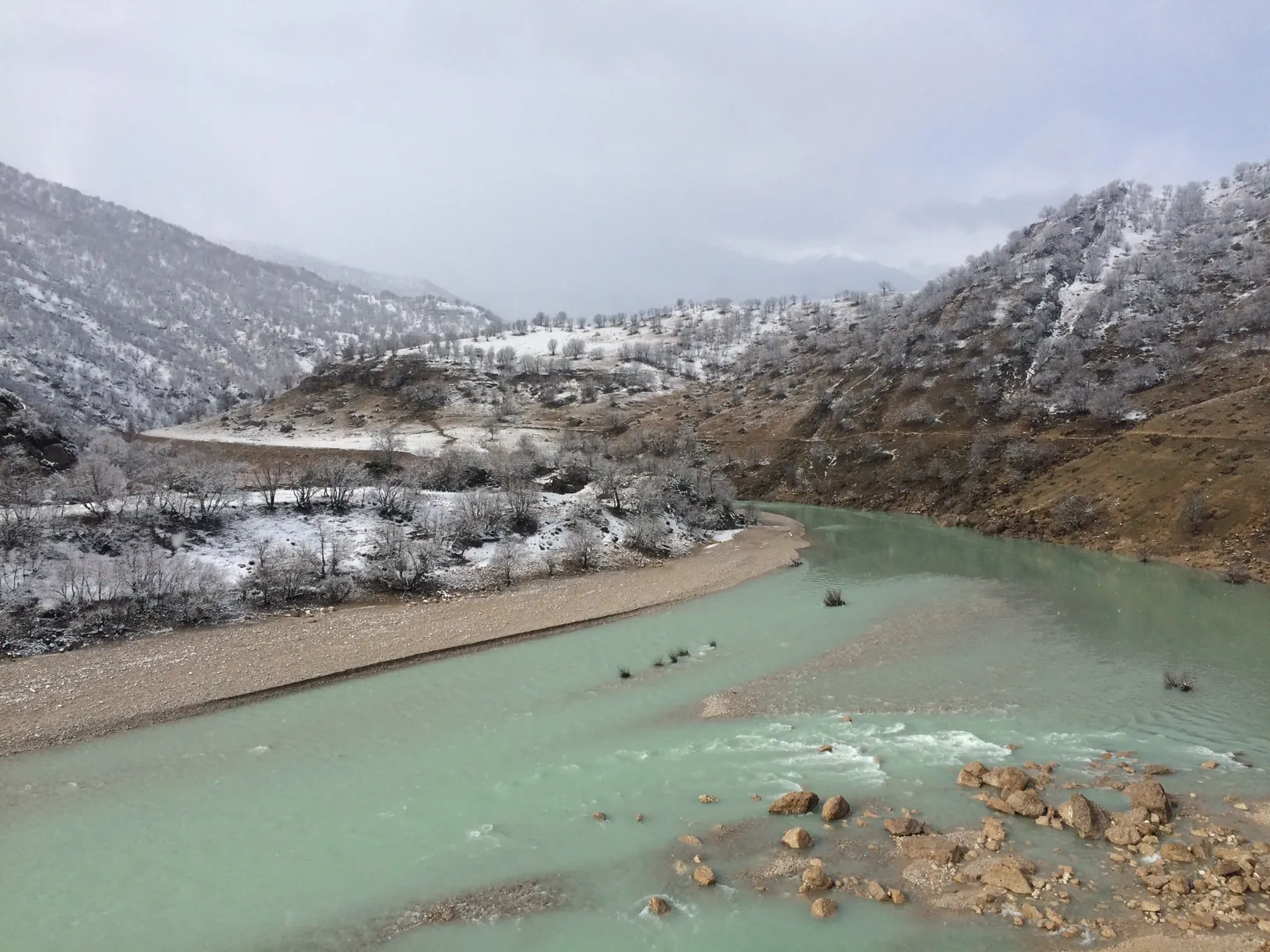
Snow on these ranges is a winter and spring condition. The later part of winter and the spring are often when parties talk about skiing the higher objectives, because days are longer and some slopes have had time to settle. That is a pattern, not a promise. A dry crest in a photograph on this site is there so you do not treat the mountains as permanently white.
There is no weather station feed and no avalanche bulletin on this website. Use a forecast you trust, and then believe the sky you are standing under more than the forecast. A summit day is allowed to be cancelled.
Mountain safety
The hazards are the ordinary ones of ski mountaineering, made sharper by distance from help:
- Avalanches on any slope that holds snow and has consequence.
- Altitude illness, especially if Damavand is the objective and the ascent is fast.
- Wind, cold, and whiteout navigation.
- Glacier or steep-snow hazards in basins such as Alam Chal.
- Remoteness. A twisted knee a long way down a Zagros valley is a logistics problem, not a patrol problem.
- Falling rock and ice where the snow is thin.
Go with people who can rescue each other. This site does not provide a guide by virtue of you reading it, and it does not publish conditions. The safety essay expands on the principles without pretending to be a manual.
Local logistics
Language in the mountains is Persian, with local languages alongside it. English is uneven outside cities. A party that cannot speak Persian needs a plan for that, whether that is a companion who can or a slower style of travel. Cash still matters in small places. Food is easy to find in towns and something you carry once you leave them.
Who has the authority to call off a day should be agreed before the trip, not at the snow line. If you are inquiring about a guided journey, ask who decides, and on what information. Do not assume a decision-maker exists until one is named.
Visas, insurance, and restrictions
Visa rules for Iran depend on nationality and they change. Confirm the current rule with the Iranian representation responsible for your passport, or with the official source that representation points you to, before you buy flights. This page will not list visa-free nationalities, fees, or processing times, because a wrong list would be worse than none.
Travel advice from your own government is a separate reading. It can change for reasons that have nothing to do with snow. Read it, and treat this website as silent on politics and on border practice.
Insurance was covered above because it is the item visitors most often discover too late. Medical care for a serious mountain injury may require evacuation to a city and possibly out of the country. Know, in writing, what your policy does.
Permits for mountains, national parks, or protected areas are local rules. Ask before you go. A page in English is not a permit.