
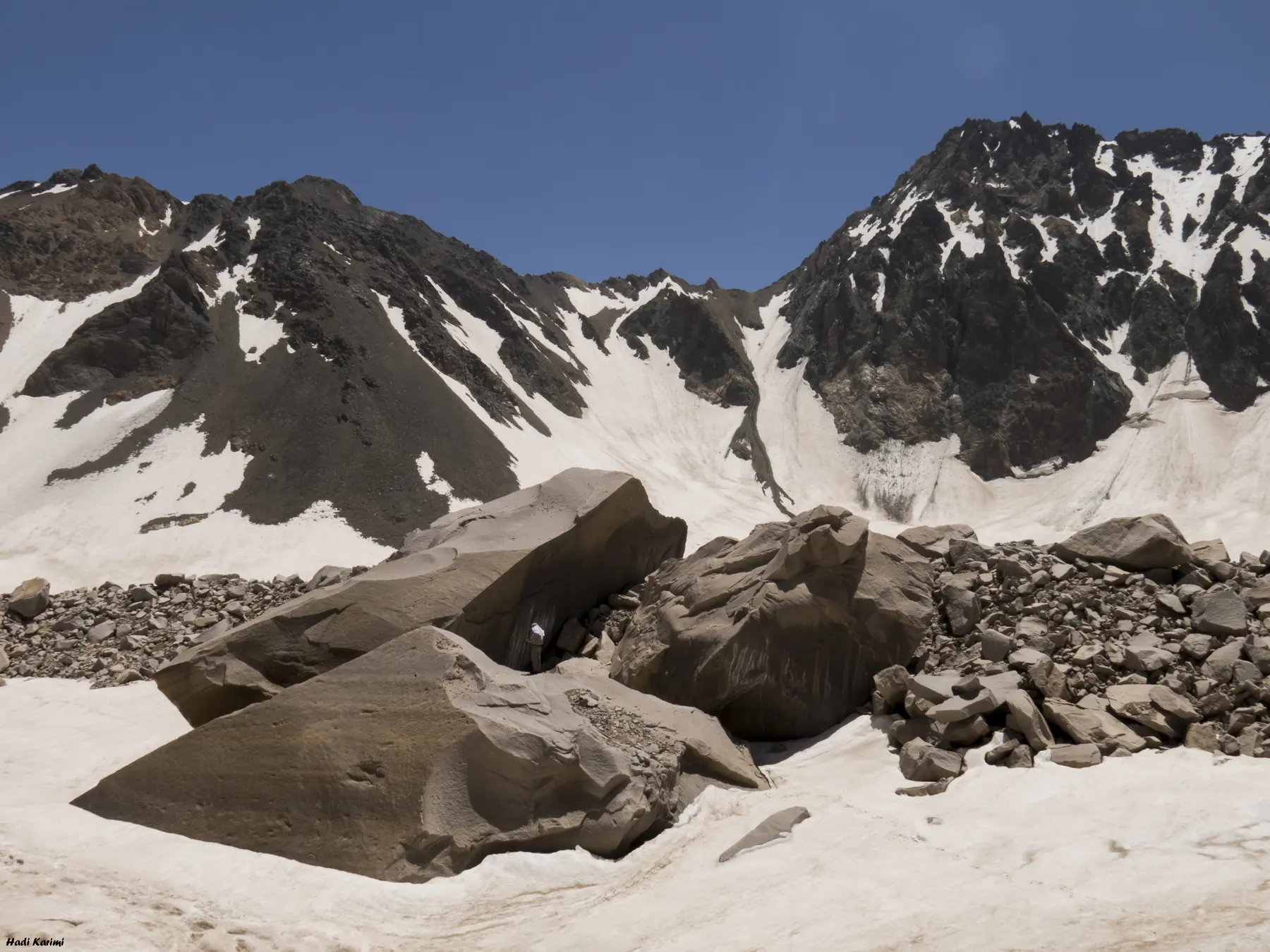

This is not a manual and it is not a bulletin. It is the short list this site is willing to repeat, because the hazard does not change its name when the range does.
Snow with consequence
Any slope that holds snow and would hurt you if it slid is avalanche terrain. That includes approaches, not only the line in the photograph. Carry a transceiver, a shovel, and a probe, and practice before the trip, not on the first suspicious slope. This website will not tell you the danger rating today. Nobody here is standing on the snow.
Altitude is a separate subject
Damavand is high enough that going too fast is a common way to fail, independent of skiing skill. Headache, nausea, and a companion who is quieter than usual are information. Descending is the treatment this page will endorse. It will not recommend a drug or a dose.
Alam Kuh, Zard Kuh, and Dena are lower and still high enough to notice on the first night. “Lower than Damavand” is not “low”.
Weather, then the sky you can see
Wind on an open crest, a whiteout on a volcano, and a warm spring afternoon on a slope that was frozen at dawn are three different problems. A forecast is a start. The decision belongs to the party that is there. Build the itinerary so a cancelled summit day does not wreck the only exit.
Distance
These are not patrolled ski areas. A injury that would be a lift ride in the Alps can be a long carry in the Zagros or a complicated evacuation on Damavand. Travel with people who can help each other, and with an insurance schedule that you have read. Tell someone outside the party the plan and the overdue time.
What a website cannot do
It cannot see the snow, check a binding, or decide that you are acclimatised. The expedition pages on this site are outlines for that reason. If a guided journey is later agreed, ask who evaluates the snow and who is allowed to turn around. Those are safety questions, and they belong in the conversation before they belong in a brochure.